|
Why the Largest Water Utility in Kansas
Switched from Ductile Iron to PVC Pipe
Please find below excerpts from an article by Shaun
Pietig, P.E., General Manager of WaterOne, serving Johnson County, Kansas, that
was featured in the December 2025 issue of Water Finance & Management.
 Resilient
Infrastructure Through Informed Decisions: WaterOne’s Pipe Journey Resilient
Infrastructure Through Informed Decisions: WaterOne’s Pipe Journey
“Prior to 2008, WaterOne installed ductile iron pipe (DIP) exclusively for
distribution mains and predominantly for transmission mains…We used polywrap and
sacrificial anode cathodic protection to mitigate corrosion, but over time,
field data revealed a troubling trend: premature corrosion in our highly
corrosive soils, even with protective measures in place.”
 “In 2008, our engineering department conducted a comprehensive analysis of pipe
performance. The findings were clear. PVC pipe offered a longer expected service
life — over 100 years — even in our soil conditions. It was lighter, easier to
install and more cost-effective. Importantly, it had the same outside diameter
as DIP, allowing for compatibility with existing fittings and infrastructure.” “In 2008, our engineering department conducted a comprehensive analysis of pipe
performance. The findings were clear. PVC pipe offered a longer expected service
life — over 100 years — even in our soil conditions. It was lighter, easier to
install and more cost-effective. Importantly, it had the same outside diameter
as DIP, allowing for compatibility with existing fittings and infrastructure.”
“As the nation faces a $452 billion funding shortfall for water main
replacement, utilities must make informed choices about materials and practices.
PVC pipe offers a safe, durable, and cost-effective solution. It’s not just a
pipe—it’s a pathway to resilience.”
Click here for article.
WaterOne and the National PVC
Trend
Additionally, Water Finance & Management highlighted the findings of Utah
State University’s
water main break report in an article by Greg M. Baird, MPA,
former utility CFO, and Principal Utility Financial Consultant with Black &
Veatch.
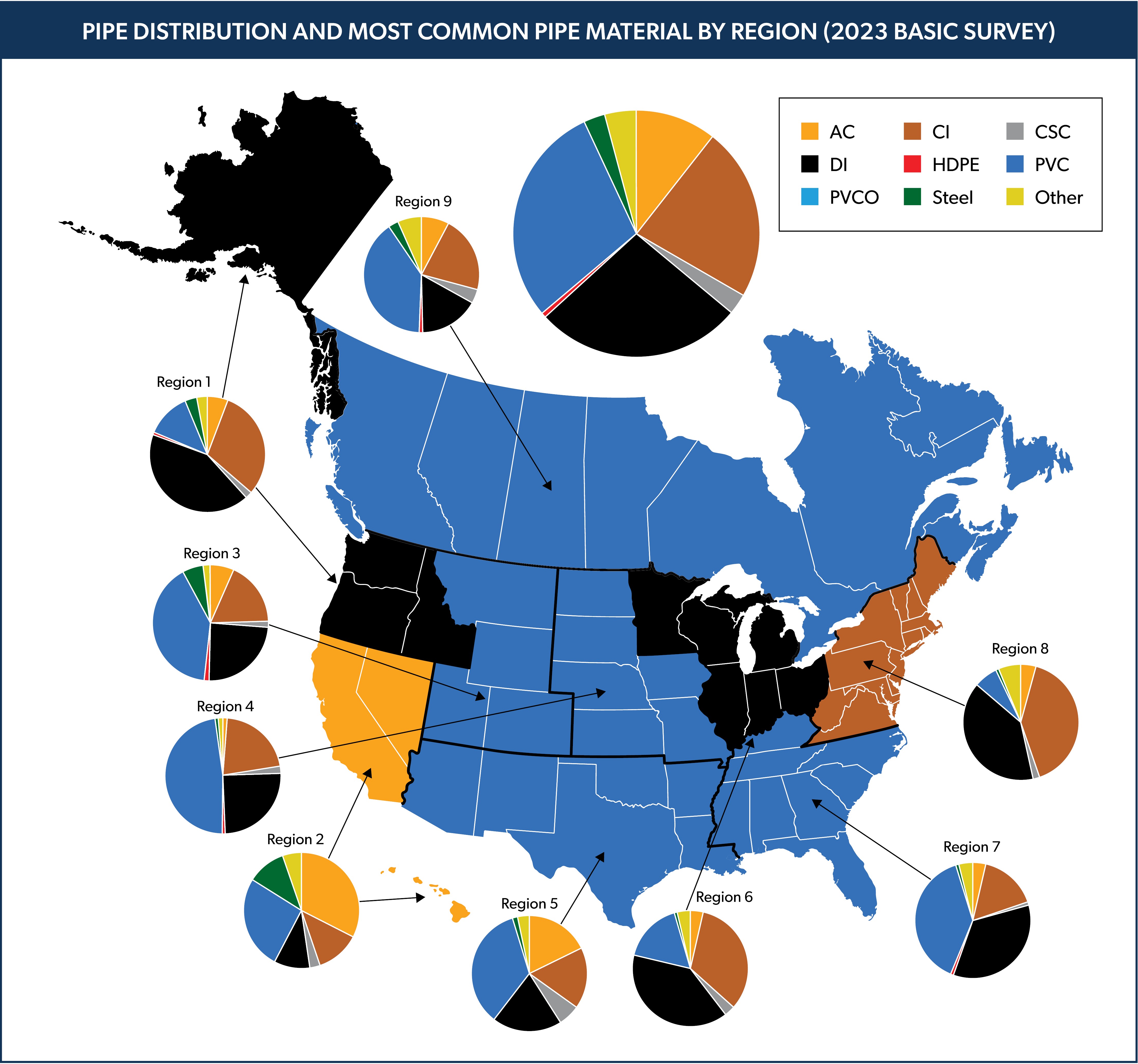
“WaterOne’s transition from ductile iron to PVC pipe mirrors a broader national
trend toward modern, corrosion-resistant materials. As shown in the regional
maps from the 2012, 2018, and 2023 USU studies, utilities across the U.S. and
Canada are increasingly adopting PVC — especially in Regions 3, 4, 5, 7, and 9.
These areas now report PVC as the predominant pipe material, replacing legacy
materials like cast iron and asbestos cement.”
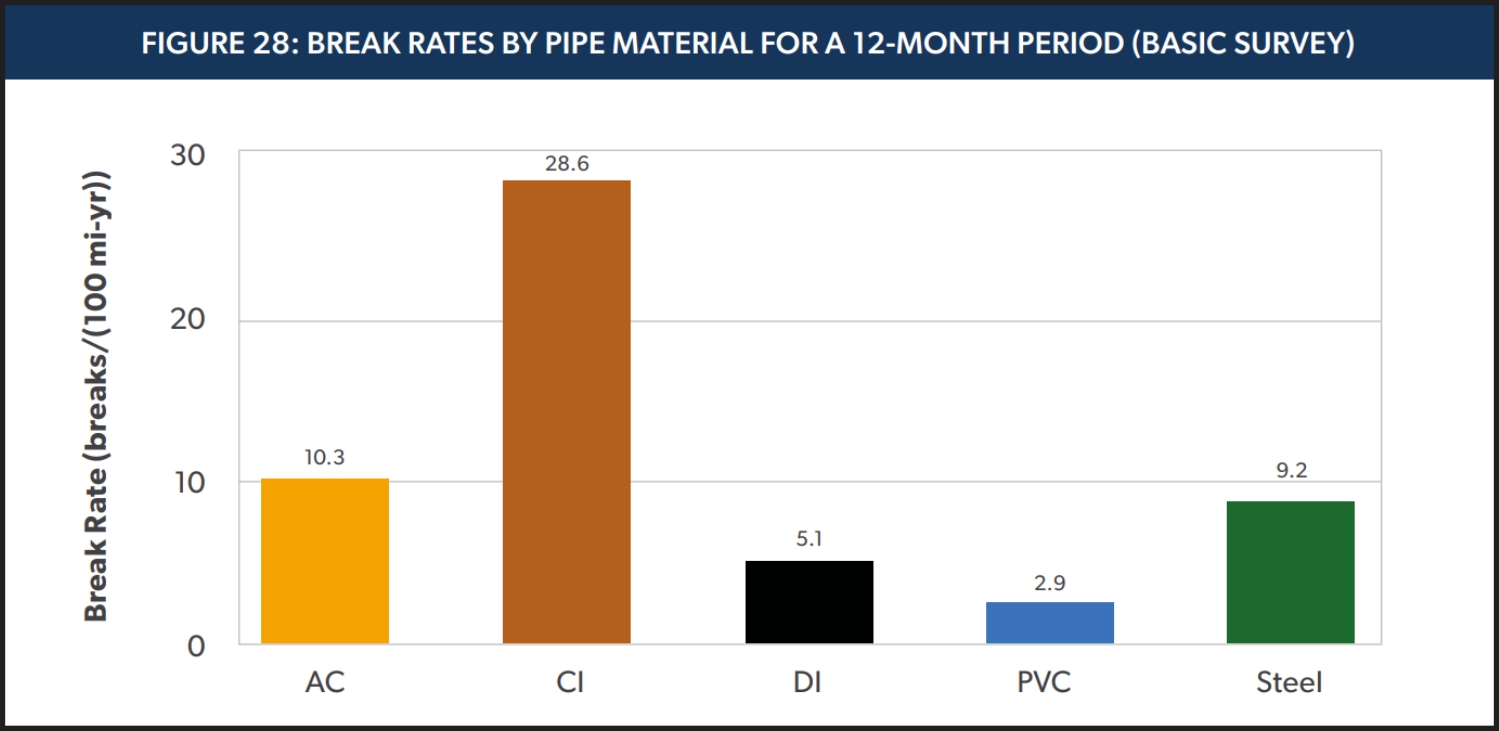
“WaterOne’s data-driven approach — beginning
in 2008 and reaffirmed in 2020 — demonstrates the same motivations driving
national change: lower break rates, corrosion immunity, ease of installation,
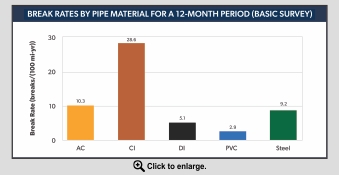
and long-term cost savings. The utility’s internal data showing PVC C900 with
break rates as low as 3.1 per 100 miles per year aligns with the national
average of 2.9, reinforcing PVC’s reliability.”
 “This
alignment between WaterOne’s local experience and national trends underscores
the value of PVC as a resilient, sustainable infrastructure material. As
utilities face aging systems and funding shortfalls, PVC offers a proven path
forward." “This
alignment between WaterOne’s local experience and national trends underscores
the value of PVC as a resilient, sustainable infrastructure material. As
utilities face aging systems and funding shortfalls, PVC offers a proven path
forward."
Click here for article.
Commentary: Americans Deserve
Accurate Information about PVC Pipe for Drinking Water
Finally, in January 2025 Water Finance & Management published an
article on the safety of PVC pipe by Anne Austin, environmental health and
safety attorney who served as Principal Deputy Assistant Administrator at the
U.S. Environmental Protection Agency.
“For drinking water systems in particular, PVC pipe has proven to be a safe,
durable, and cost-effective choice, making it a cornerstone of modern water
infrastructure. In fact, there are an estimated 2.5 million miles of PVC water
and sewer pipelines in the United States and Canada.”
“The safety of PVC piping has been thoroughly
evaluated for more than 70 years by federal regulatory agencies, independent
certification organizations, and scientific studies. U.S.-made PVC pipe
consistently meets or exceeds rigorous safety
 standards
established by groups like the National Sanitation Foundation (NSF) and the
American National Standards Institute (ANSI).” standards
established by groups like the National Sanitation Foundation (NSF) and the
American National Standards Institute (ANSI).”
“Additionally, more than 10 million water-quality tests conducted on water
transported through PVC pipes have confirmed its safety, with “non-detect”
levels of VCM consistently reported by NSF and the U.S. Environmental Protection
Agency (EPA).”
Click here for article.
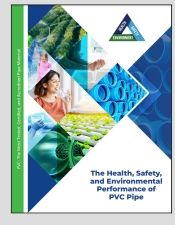
Click here for more information of the health, safety, and environmental
performance of PVC pipe.
|
Regards,
|
|
|
Bruce Hollands
President & CEO | Uni-Bell PVC Pipe
Association
201 E. John Carpenter Freeway, Suite 750 |
Irving, TX 75062
T. 972.243.3902 ext. 1019 | F. 972.243.3907
www.uni-bell.org
  
|
|